
“To be like everyone else.”
I do not recognize such a desire. Nor the experience. Like others?
Often the starting point of queer melancholia* is loss: a person wants something ordinary – a family, a relationship, recognition, belonging – and does not get it. What follows is grief over not being able to be like everyone else.
But what if melancholia begins earlier?
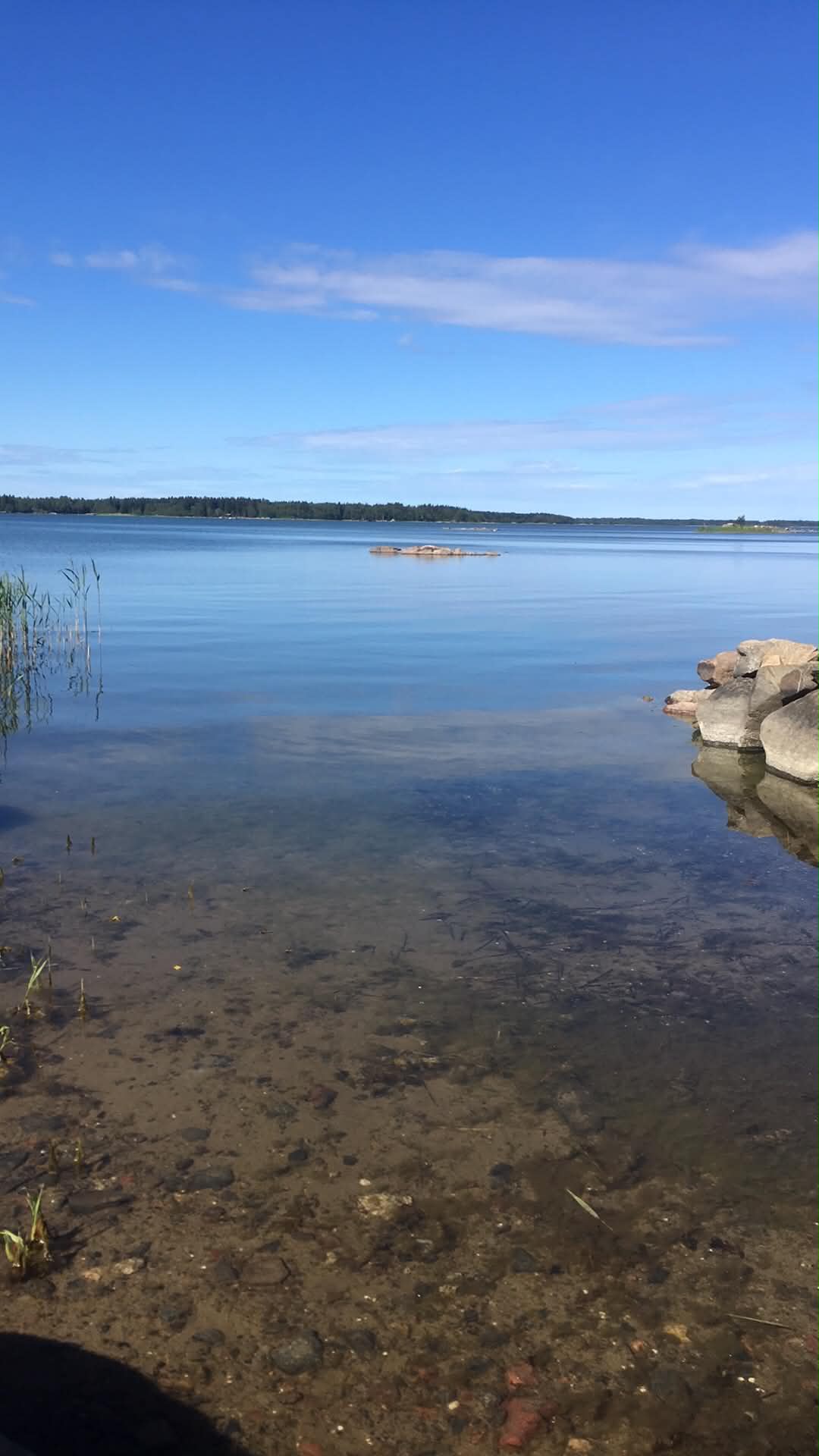
I was already a solitary and sorrowful child. On summer mornings I woke at five, crept down to the seashore and stared into the water. I watched the fish, the reflections of the sun, and longed, quite silently, crouching. The quick, flashing movements of the fish in their bright translucent world gave me a moment of rest and a belief in other spaces, where breathing is done otherwise.
I was perhaps nine. Or thirteen. Or forty-three.
In my memory, the feeling of outsideness appears not so much as an experience of being rejected as of watching from the side.
As if I had been present, but at a slightly different angle, or at a different time, than the others. Not so much outside the community as askew to it.
Perhaps that is why the word loneliness sometimes feels misleading. Even though it is also a terribly strong way of being.
Loneliness means the absence of people. Outsideness can arise in the midst of people. When you are full of excitement, and notice that the others’ excitement is, after all, elsewhere.
The child creeping down to the shore did not know she was a lesbian. She already knew she felt strange desires; the experience of separateness was given space, and the water’s mirror, in the silence of the early morning. Perhaps lesbian culture and queer theory later offered it an important language, a return from the shore without losing oneself. But the feeling itself was older.
That is why I sometimes wonder whether queer melancholia is always about loss. Or whether it is about the position of the observer. About watching the world slightly from the side, slightly too early in the morning, at the water’s edge, while the others are still sleeping or turning in their beds.
The gaze into the water turns melancholia into something else: from lack into precision, from grief into strength. From the shore, the longing was not directed at the mainland, at joining the others – even though queer later offered recognition there, and a more open language – but somewhere away, toward a horizon that did not yet exist. The child on the shore was not planning for the mainland but practicing the horizon.
Perhaps the tragedy of outsideness is not always that one cannot join in. Perhaps the tragedy is that one begins to watch from the side so early that, later on, one can no longer fully believe in what one assumes the others take for granted.
This can lead to a spiralling loneliness. But also to something else. A stubborn desire, nevertheless, to have a voice. Not because one would want to be like the imagined others, but because the belonging of others can only be imagined – and one can never be certain whether anything is entirely true. Rights do not tell us. Art can suggest. The question keeps echoing until something begins to resonate with it.
Not all outsideness is loss. Sometimes it is practice. Practice for a future that does not yet exist.
Practicing the horizon does not necessarily lead to happiness. It can produce a lasting distrust of ready-made orders, and a difficulty in settling into places that others consider natural, or that would offer external protection. But it can also produce the capacity to see alternatives.
Perhaps this is why so many queer people have been drawn to art, politics, utopias, new forms of kinship, and futures that do not yet exist. And perhaps this is why so many have been able to live without being destroyed by outsideness.
Practicing the horizon does not remove loneliness. It does not make outsideness easy. But it can make it bearable, even fertile. It teaches one to look toward something that cannot yet be fully seen or named – a readiness for a possible world to come.
The attentive child crouching on the shore is energy in which the tension is already there. It hurts, and it gives pleasure. The child is quietly very alive.
With thanks to the writer Heidi Airaksinen and her Sateenkaareva queer writing group – for the resonances that answered.

* On melancholia and its queer afterlives, see e.g. Sigmund Freud, “Mourning and Melancholia” (1917); Judith Butler, The Psychic Life of Power (1997); Heather Love, Feeling Backward: Loss and the Politics of Queer History (2007); José Esteban Muñoz, Cruising Utopia: The Then and There of Queer Futurity (2009); Jack Halberstam, The Queer Art of Failure (2011); Ann Cvetkovich, Depression: A Public Feeling (2012); Lynne Segal, Radical Happiness: Moments of Collective Joy (2017); and, on queer grief as relational practice, Paul Boyce, Trude Sundberg & Antu Sorainen, “Queer Grief: Relations After Death and Loss,” lambda nordica 30(2) (2025): 7–26.

